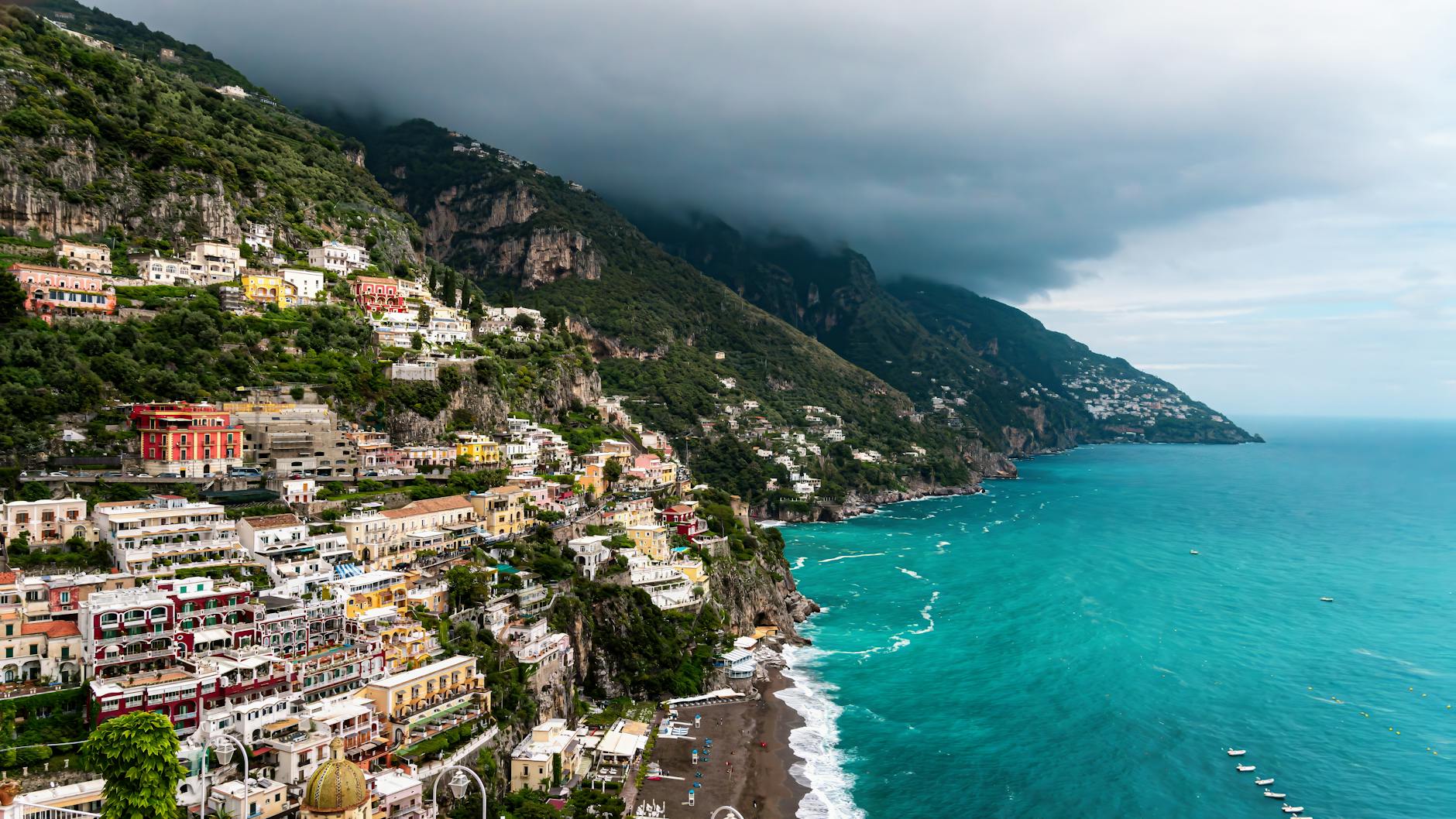
There are two ways to meet the Amalfi Coast. The first is by ferry — you round a headland and Positano spills down a cliff like a watercolour someone forgot to dry. The second is by bus along the SS163 Amalfi Drive, where the driver hugs a guardrail that ends in air, and you grip the seat in front of you. We strongly recommend the ferry. Five days is enough to do this coast properly if you stop trying to do all of it.
The Big Decision: Base in Positano or Sorrento?
This is the question every Amalfi itinerary lives or dies by. Both towns are gorgeous; they solve different problems.
| Positano | Sorrento | |
|---|---|---|
| Vibe | Cliffside village, vertical, dreamy | Bustling small city, flatter, working |
| Price | Premium | Generally more moderate |
| Stairs | Many. Hundreds. Daily. | Almost none |
| Ferry hub | Yes (seasonal) | Yes (year-round to Capri + Naples) |
| Best for | Honeymoons, photography, short stays | Families, longer stays, budget, mobility |
| Drawback | Logistics + cost + crowds at the marina | Not technically on the Amalfi Coast |
Our take: if you can swing it, base in Positano for the first two nights (the views are non-negotiable) and shift to Sorrento for the final three (cheaper, easier ferry connections, better dinner options). If you want one base for simplicity, choose Sorrento.

Day 1: Arrival + Positano Slow Walk
Fly into Naples (NAP). From the airport, the easiest path is the Curreri bus direct to Sorrento (13 EUR each way on the operator’s site, which also lists the timetable), then a ferry from Sorrento to Positano (check the season and timetable). If you’re starting in Positano, skip the bus and take the ferry the whole way — arriving by sea is the right first impression.
Drop bags. Walk down Via Cristoforo Colombo to Spiaggia Grande. Don’t try to “do” anything today. Eat granita di limone. Watch the evening light hit the duomo’s majolica dome. For dinner, book ahead in high season and consider eating a street or two back from the marina, where restaurants tend to be cheaper.
Day 2: Path of the Gods Hike
The Sentiero degli Dei is the one walk that makes the coast click. The classic route runs from Bomerano (Agerola) down to Nocelle, a mostly-downhill cliffside trail — allow several hours with stops, longer if you’re stopping for photos every two minutes (you will).
Logistics:
- Take the local bus from Amalfi up to Bomerano in the morning; check the current operator and timetable, as services change.
- Hike to Nocelle. From Nocelle, you have a choice: a long stone staircase down to Positano, or a short local bus to Positano’s high road and a much shorter staircase.
- Wear actual trail shoes. The trail is uneven, and there are exposed sections with a steep drop.
Back in Positano in the afternoon, swim and nap. For dinner, eating up the hill away from the marina is often cheaper.
Day 3: Amalfi Town + Ravello (Villa Cimbrone)
Ferry from Positano to Amalfi (check the timetable and journey time on the ferry operators’ sites). Amalfi the town is smaller than its reputation — the Duomo of Sant’Andrea, the paper museum, a pebble beach. Two hours is plenty.
From Amalfi, take the local bus up to Ravello. Ravello is the quiet answer to everything loud on the coast: a hilltop town, two well-known villas, and the Ravello Festival in summer. Walk to Villa Cimbrone, pay the entry fee (check the current price and hours with the villa), and look for the Terrace of Infinity, its famous viewpoint.
Catch a late-afternoon bus back to Amalfi, then the ferry home; check the last departure time before you go up the hill.
Day 4: Capri Day-Trip (Faraglioni, Anacapri, Blue Grotto Math)
Capri rewards an early start and punishes anyone who shows up at 11am.

Plan:
- Take an early fast ferry from Sorrento or Positano (Sorrento generally has more frequent service; check current timetables).
- Land at Marina Grande. Skip the immediate funicular queue and walk along the harbour to a small boat tour booth — a round-the-island boat trip is a good way to see the Faraglioni rocks and the sea caves.
- After the boat, take the bus up to Anacapri (the quieter, higher town).
- Chairlift to Monte Solaro for the panorama.
Blue Grotto math. The Blue Grotto is on Capri, not on the Amalfi Coast. Costs stack up: the grotto itself charges an entrance ticket (19 EUR per person according to Capri’s tourism site), on top of the boat that takes you there from Marina Grande and the skippered rowboat (up to four passengers) that carries you through the narrow opening into the cave, so the real total is higher. Waits can be long in peak season. The grotto opens “weather permitting” and can close in rough seas or high winds, so check conditions on the day. Opening hours vary by season (8:30am to 6:00pm from April to September, shorter hours after that, and the grotto is closed on 25 December and 1 January). Our call: if it’s your first time and the sea is calm, it is worth considering; if conditions are rough, skip it and spend the time in Anacapri.
Check the last ferry back to your base before you go, and do not miss it. Capri hotels are expensive.
Day 5: Sorrento + Departure
Sleep in. Sorrento isn’t technically on the Amalfi Coast (it sits on the other side of the peninsula, facing the Bay of Naples), but it’s the gentle landing pad on the way out.

Walk the Villa Comunale gardens at the cliff edge. Browse the citrus shops along Via San Cesareo. From Sorrento there are bus and train links back to Naples; the Curreri airport bus (see Day 1) runs to Naples Airport.

Ferry Schedules & Money
The coast runs on two ferry operators: Travelmar (Positano–Amalfi–Salerno, the workhorse intra-coast line) and Alilauro / NLG (longer routes to Capri and Naples). Schedules and frequency vary by season, with the densest service in summer. Always check the day before; rough seas can cancel runs without much warning.
Cash + cards: tap-to-pay is universal in towns. Smaller trattorias up the hills sometimes prefer cash.
💱 1USD ≈ 0.9EUR
FAQs
Is the Blue Grotto worth the wait?
Once, on a calm day. The colour is genuinely otherworldly — an intense blue from light entering the cave through its underwater opening. But the cost stacks up (an entrance ticket plus the boat and the rowboat) and the wait can be long in peak season, while the time inside the cave is short. If conditions are good and you’ve never seen it, yes. If the sea is rough or you’ve been before, skip it and spend the time in Anacapri.
Should I rent a car on the Amalfi Coast?
No. The SS163 has limited parking (often paid, often booked out by hotels), the towns are pedestrian-cored, and the bus + ferry network connects everything you’d actually want to visit. A car is useful only if you’re staying inland in Agerola or doing Paestum + Cilento on the same trip. Otherwise it’s an expensive stress object.
What’s the best month to visit?
Late May, early June, and mid-September. July and August are hot, crowded, and priced for honeymoons. April and October can work, but ferry frequency may drop and some restaurants may be closed. The shoulder weeks at either end of summer are the sweet spot — warm sea, half the crowds, full ferry schedule.
Are Positano hotels really that expensive?
Yes, Positano is among the priciest places on the coast, particularly in peak season, and rates vary widely by hotel and date, so compare current prices. Shoulder season is generally cheaper. The workaround is to base in a nearby village such as Praiano or in Sorrento, and ferry in to Positano for day visits.
Sources
- Italia.it — Amalfi Coast
- Travelmar ferry schedules
- Alilauro ferry schedules
- Wikivoyage — Amalfi Coast
- UNESCO World Heritage — Costiera Amalfitana
- Capri.com — Blue Grotto info
Hero photo: see public/images/blog/amalfi-coast-5-days-hero.json. Inline photos: see docs/image-licenses/amalfi-coast-5-days.md.
Heads up! Some links on this page are affiliate links. We may earn a small commission at no extra cost to you. This helps us keep Traveloonie running and free for everyone.
Last updated 2026-10-29.