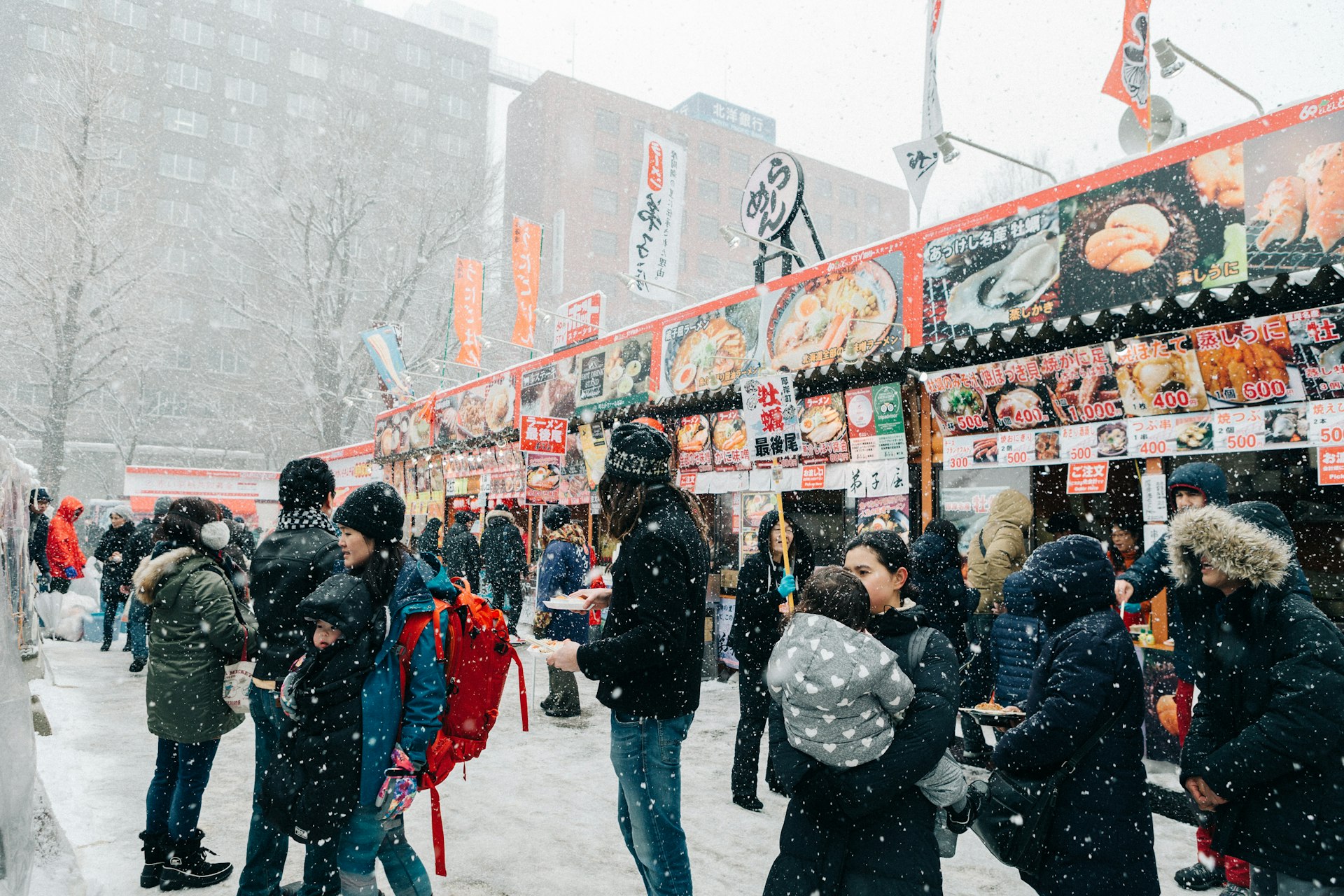
The first thing you notice in Otaru at -8°C is the sound — a dry, percussive crunch underfoot that southern-Japan snow never quite makes. Steam curls off a roadside ramen counter in Sapporo, fogging the window so thoroughly that the noren outside disappears for a beat. A week in Hokkaido in winter is exactly this kind of trip: cold sharp enough to wake you up, food warm enough to forgive it.
Why Hokkaido in Winter
Hokkaido is Japan’s northernmost main island, and its winters are the reason a lot of skiers fly past the Alps to get there. Cold, dry Siberian air picks up moisture over the Sea of Japan and dumps it on the western side of the island as light, low-density powder — the snow that ski magazines call “Japow.” But the appeal isn’t only the mountain. Hokkaido in February gives you a snow-sculpture festival the size of a small city, a port town strung with gas lamps along a frozen canal, miso ramen designed to be eaten at zero degrees, and onsen towns where the steam from outdoor baths drifts into pine forests.
A week is enough to do the highlight loop — Sapporo for the city and the festival, Otaru for the canal day trip, Niseko for the powder, and one quiet onsen night to wind down — without feeling rushed. Two weeks would let you add Furano, Asahikawa, or the drift ice up at Abashiri. One week, done well, is what most travelers actually have.
Days 1-2: Sapporo (Snow Festival + Miso Ramen)
Fly into New Chitose Airport (CTS), take the JR Rapid Airport train into Sapporo Station — about 37 to 40 minutes at the quickest, per Sapporo’s tourism site. Base yourself near Odori Park or Susukino; both put you within walking distance of the Sapporo Snow Festival’s central venues if you’ve timed it right.
The Sapporo Snow Festival typically runs in early February each year; the 2027 festival is scheduled for 4 to 11 February (official site). The main site runs along Odori Park, and a second venue in Susukino features ice sculptures rather than snow. Go after dark at least once — the sculptures look completely different lit up. Bring hand warmers, the kind that go inside gloves and boots; you’ll be standing still a lot more than you think.
For food, Sapporo is famous for miso ramen. Ramen Yokocho (“Ramen Alley”) in Susukino is the obvious pilgrimage, though newer specialists are scattered across the city. Order the miso, add corn and butter, eat it before it cools — that’s the whole brief.

Day 2, give yourself a slower morning. The Hokkaido Museum of Modern Art, the Sapporo Beer Museum, and the underground arcades that let you cover part of the city center without putting your coat back on — all good rainy-snowy-day options.
Day 3: Otaru (Canal + Music Box Hall)
Otaru is roughly 30 to 45 minutes northwest of Sapporo by JR train, depending on the service (Hokkaido Love). It is a historic port town on the Sea of Japan coast, and the stone warehouses and gas lamps along the canal are what most people come to photograph.
If you’re there in early February, the Otaru Snow Light Path Festival is held around the same time as the Sapporo Snow Festival, lighting up the canal and other sites in the evening (the 2026 edition ran 7 to 14 February, 17:00 to 21:00, per Hokkaido Love; check each year’s dates). It’s quieter and slower than the main Sapporo event. We’d argue it’s the better evening of the two.

The other Otaru must-do is the Music Box Museum near Sakaimachi Street — a historic brick building full of music boxes, with a steam clock outside that sounds every 15 minutes (Hokkaido Love). Sakaimachi itself is lined with glass workshops and shops, which is exactly the kind of indoor browsing February deserves. For lunch, the town is known for sushi, and the Sankaku Market is close to the station.
Days 4-6: Niseko (Powder Days)
From Sapporo, Niseko is about two and a half to three hours by direct bus, or by train via Otaru plus a shuttle (train services are limited, so check timetables). See Niseko’s access page. The resort area is four interconnected ski areas — Grand Hirafu, Niseko Village, Annupuri, and Hanazono — covered by the All Mountain Pass (Niseko United).
Niseko reports around 15 meters of snow in a typical winter, measured mid-mountain (Niseko United), which is why it shows up on every “best powder on Earth” list. Tree skiing is a big draw for experienced skiers. Beginners are fine too: Annupuri, the smallest of the four areas, is the gentlest, and Grand Hirafu is the largest and has most of the bars and restaurants.

If you’re not skiing, Niseko still works. Snowshoe tours, evening restaurant-hopping in Hirafu village, and hot springs such as Goshiki Onsen (a mountain onsen near the Annupuri and Iwaonupuri trailheads) can fill a full three days without ever clipping in.
Where to stay matters more here than in Sapporo. Lodging close to the lifts is convenient but typically costs more, while places further out usually mean relying on shuttles. Book early for January and February.
Day 7: Onsen Wind-Down (Jigokudani / Noboribetsu)
Three days of powder catches up to your legs. The cleanest way to finish a Hokkaido winter week is a single night in an onsen town — and Noboribetsu, southeast of Niseko, is the classic pick. Check train and bus connections in advance, as journeys between the two involve transfers.
The town sits beside Jigokudani (“Hell Valley”), a volcanic valley that gives the area many different types of mineral-rich hot spring water (JNTO). Wooden boardwalks run through the valley; in winter they can be slippery, so wear non-slip footwear. The contrast between the steam, the snow, and the bare rock is hard to beat.

Stay at a ryokan with its own onsen and book the kaiseki dinner included. Many ryokan provide a yukata to wear and a tatami room, and a rotenburo (outdoor bath) with snow landing on your hair is the closing image you want for this trip. From Noboribetsu, trains and buses run back toward Sapporo and New Chitose Airport, usually with a transfer, so check the connection and allow extra time before a flight.
Packing for -10°C
Hokkaido cold is dry, which is good news — it feels less brutal than damp 0°C in London or Seoul — but you still need real layers. Our short list: a windproof shell, a down or synthetic mid-layer, merino base layers (top and bottom), insulated waterproof boots (not just leather), a beanie that covers your ears, a neck gaiter or buff, and gloves rated for actual cold, not commute cold. Pack hand warmers, lip balm, and high-SPF sunscreen — snow glare at altitude is a real thing. Hotels in Sapporo and Niseko run hot indoors, so plan to peel down to a single layer the second you walk in.
FAQs
When does the Sapporo Snow Festival happen?
The festival typically runs for about a week in early February each year; the 2027 festival is scheduled for 4 to 11 February. Check the official site (snowfes.com) for that year’s exact dates before booking flights, because they shift with the calendar.
Do I need snow chains to drive in Hokkaido?
Winter driving on snow and ice is a different skill from ordinary driving. Japan’s national tourism organization advises confirming with the rental company in advance that the car has studless winter tires rather than regular ones, and also making sure the car carries snow chains, even with studless tires (JNTO). Winter tires are often available at no extra charge when you book, and some roads close in winter, so check conditions before you set out. Many travelers skip the car entirely: JR trains, the Hokkaido Resort Liner bus, and resort shuttles connect Sapporo, Otaru, Niseko and Noboribetsu, though some services are limited, so check timetables.
Is Niseko good for beginners?
Yes. Annupuri is the smallest and gentlest of the four Niseko areas and suits beginners (JNTO). Ski schools in the area run lessons, so ask your accommodation which offer English instruction. The tree skiing and off-piste terrain are what advanced skiers come for.
How cold does it actually get?
In Sapporo, the Japan Meteorological Agency’s 1991-2020 normals for January give an average daily high of about -0.4°C and an average daily low of about -6.4°C (JMA), and individual days can be much colder. Mountain areas such as Niseko run colder. The wind, especially on the coast, is what makes it feel sharp — block it and the dry cold is very manageable.
Can I do this trip without skiing?
Easily. Swap the three Niseko days for two in Furano (known for its lavender fields in summer, with winter activities in the snow season) and one extra in Noboribetsu, or add a day trip to Lake Toya. Hokkaido in winter has plenty of non-ski reasons to visit.
Sources
- Sapporo Snow Festival official
- Niseko Tourism
- JNTO Hokkaido guide
- Wikivoyage: Hokkaido
- Otaru Tourism Association
- Noboribetsu Tourism
Hero photo: see public/images/blog/hokkaido-winter-week-hero.json. Inline photos: see docs/image-licenses/hokkaido-winter-week.md.
Heads up! Some links on this page are affiliate links. We may earn a small commission at no extra cost to you. This helps us keep Traveloonie running and free for everyone.
Last updated 2026-10-29.